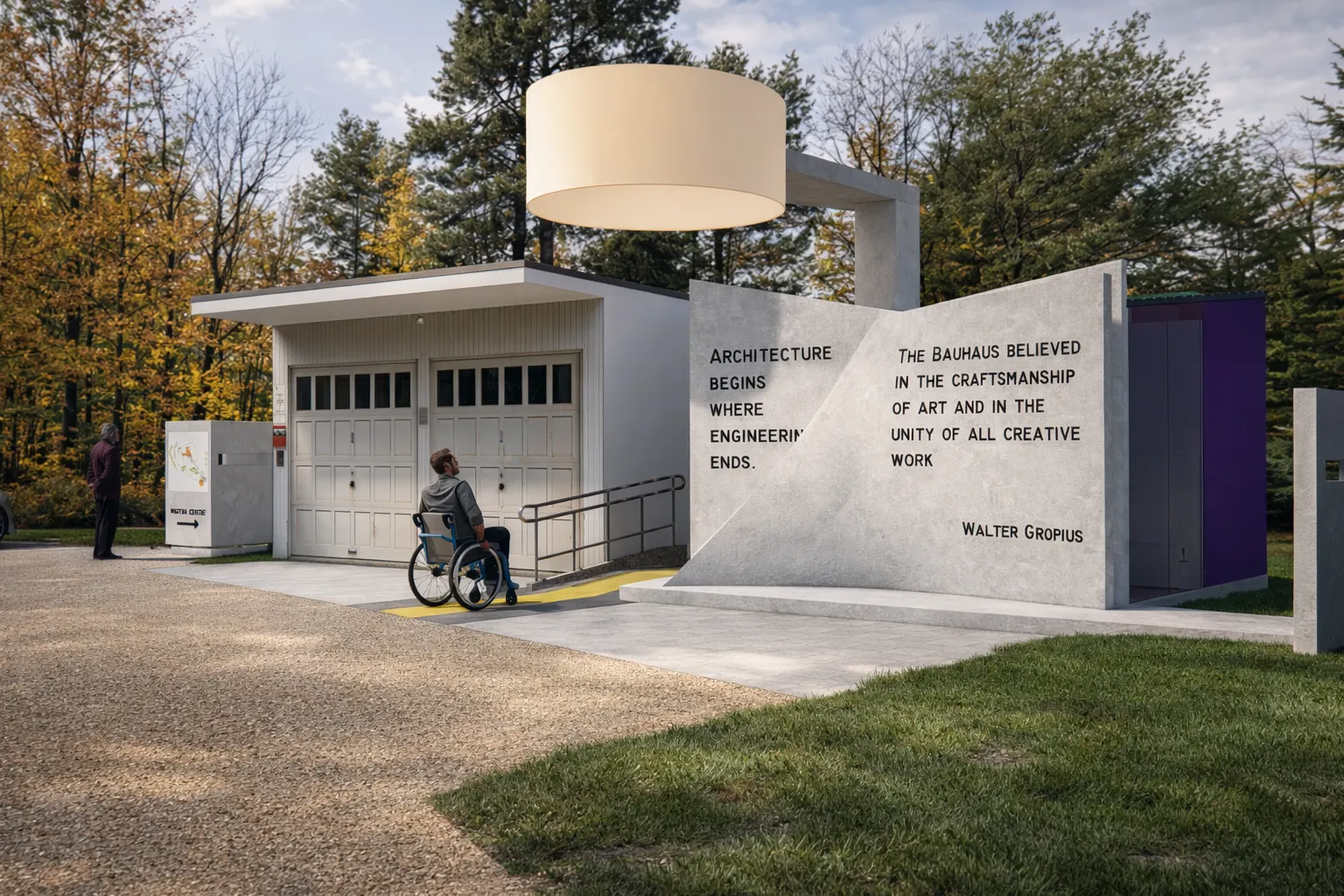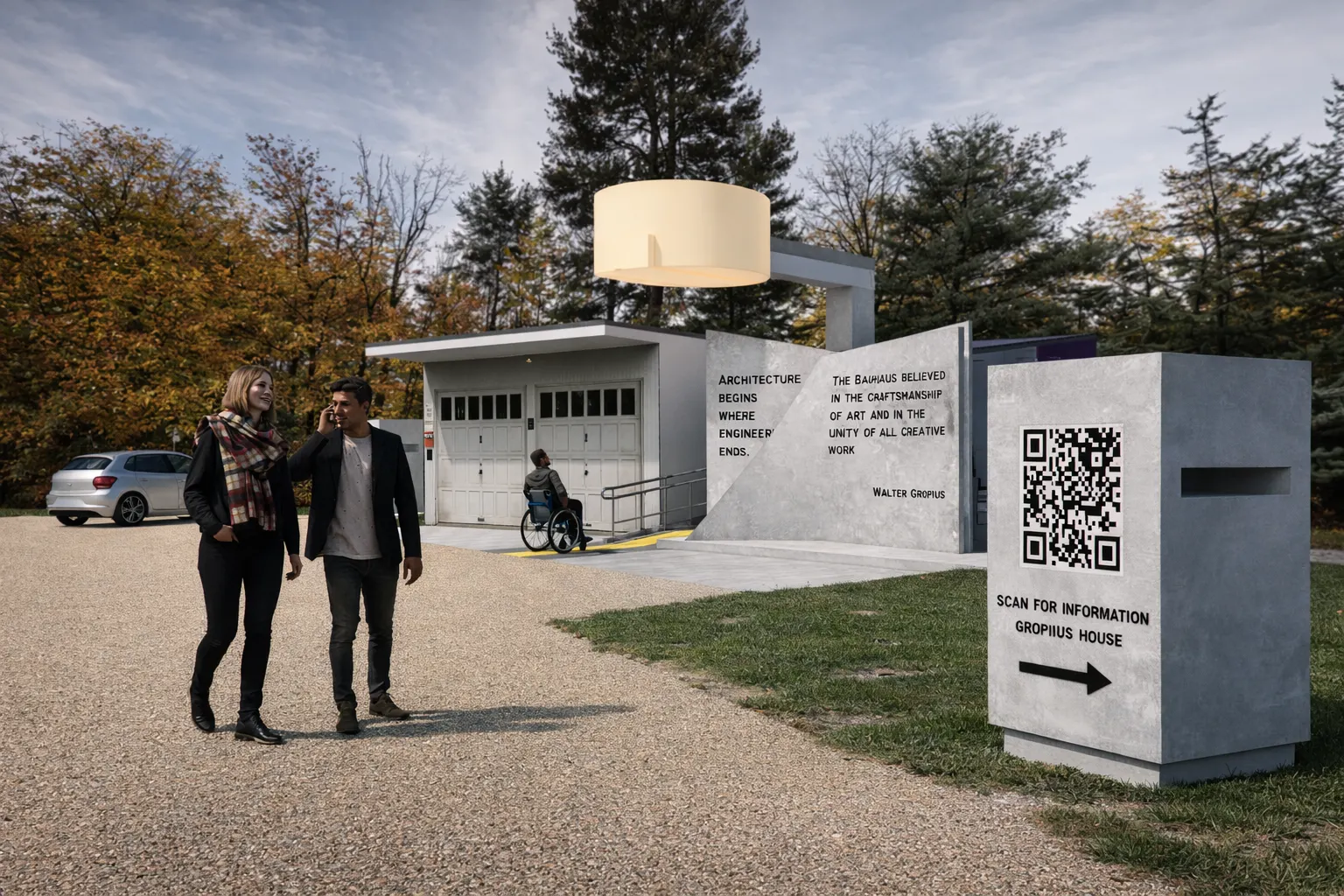
The proposed Bauhaus Restroom is conceived as an architectural object that transforms a utilitarian function into a spatial narrative, rooted in Bauhaus ideology of clarity, functionality, and social purpose. The design draws from the symbolic metaphors of a book and a lamp, representing knowledge and enlightenment-core values promoted by Walter
Gropius.
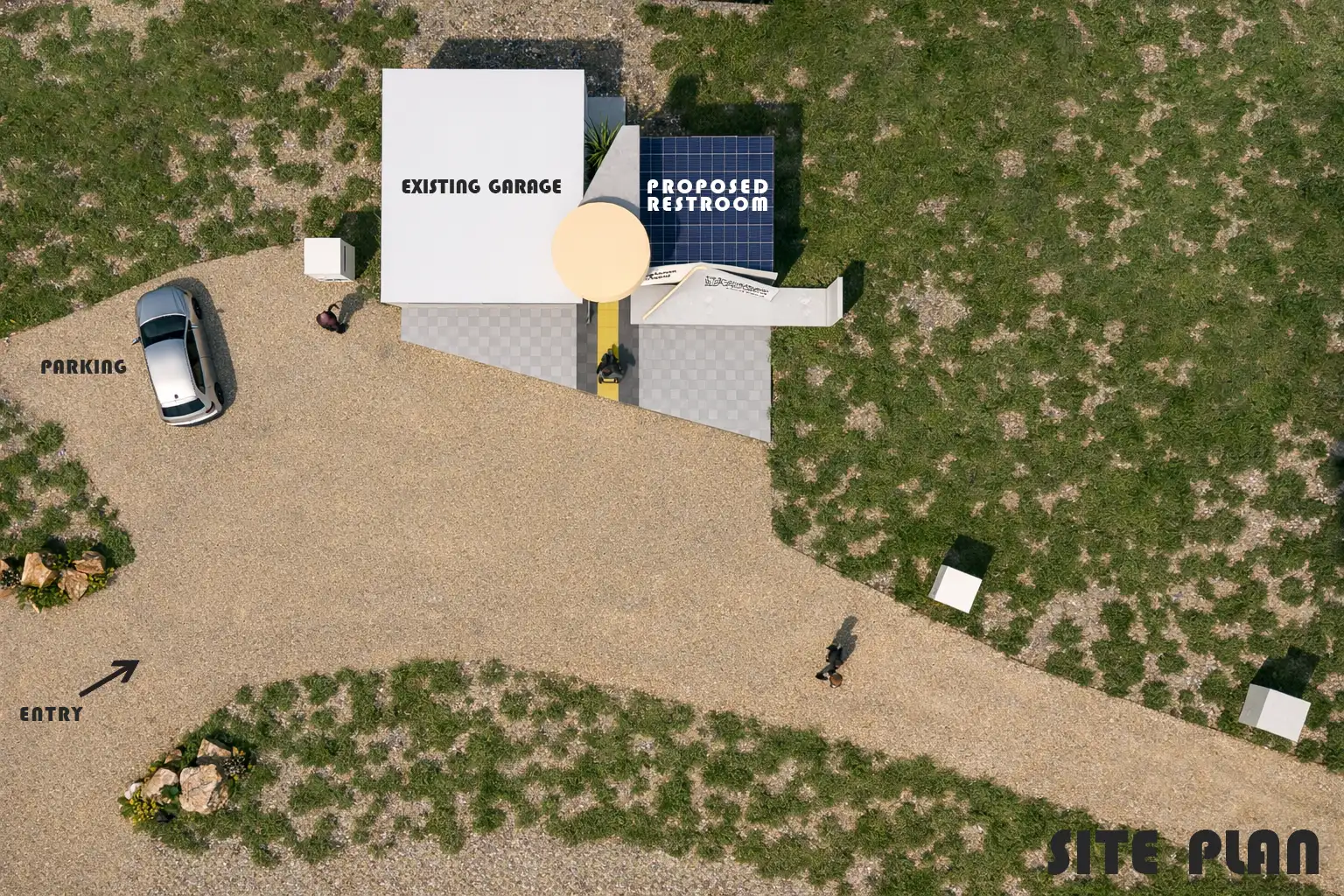
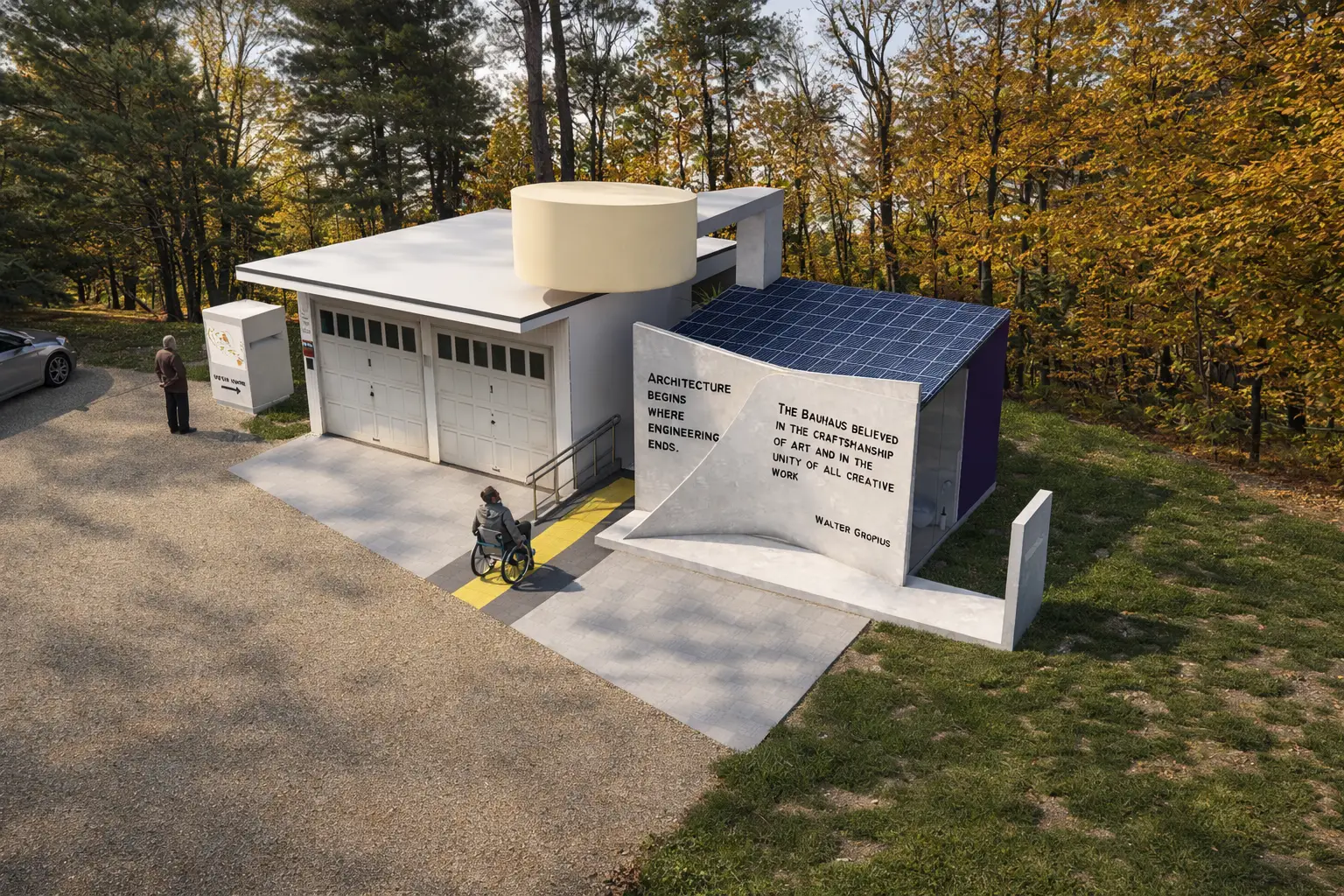
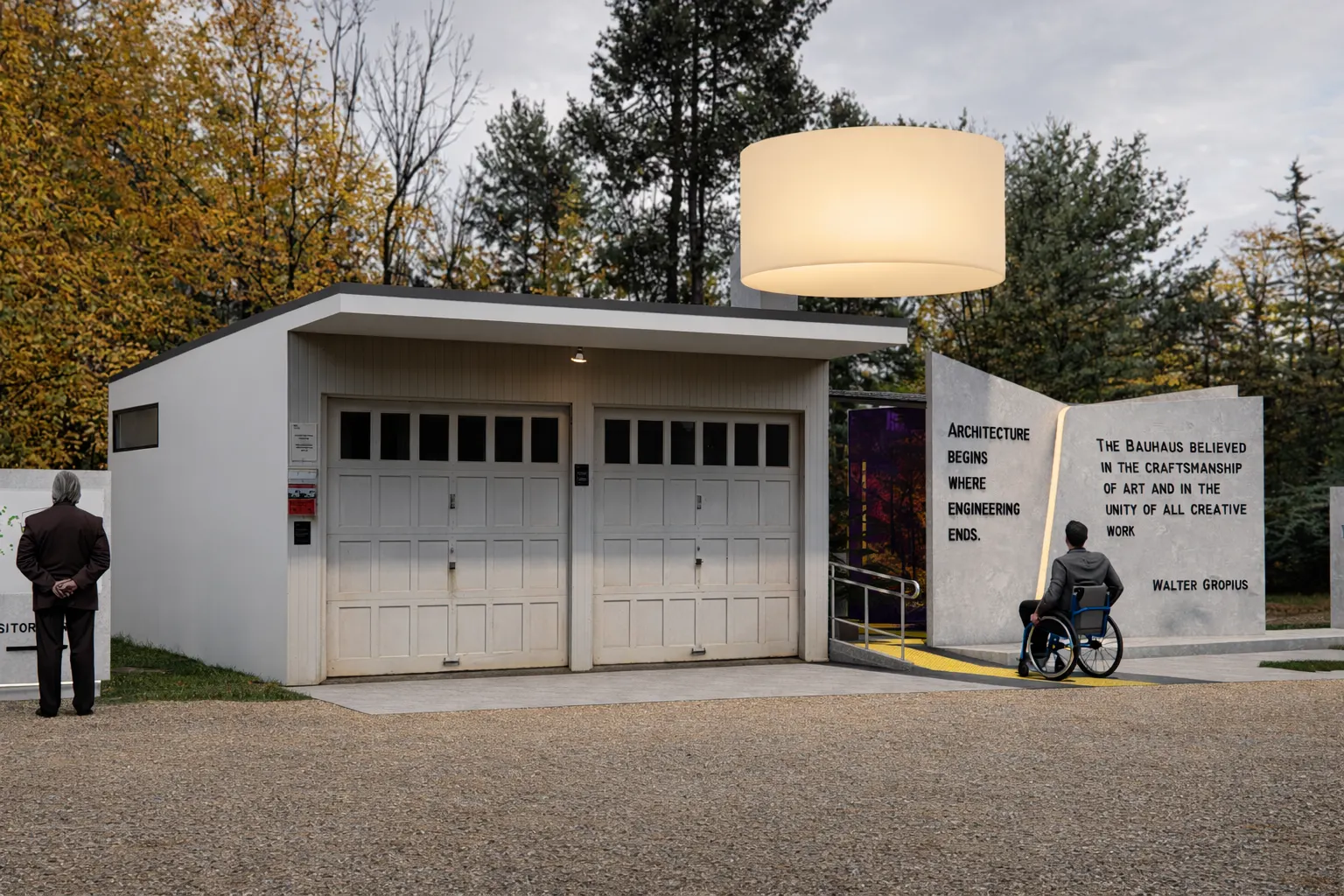
The existing garage structure on the left is retained AS IT IS, respecting its historic character and context. In contrast, the newly introduced restroom block on the right becomes an expressive yet restrained architectural insertion. Its primary façade is articulated as a book page, a gently inclined sculptural surface that visually reads as a sheet of paper emerging from the site. This façade carries the philosophical weight of Bauhaus thought, turning architecture into a readable medium.
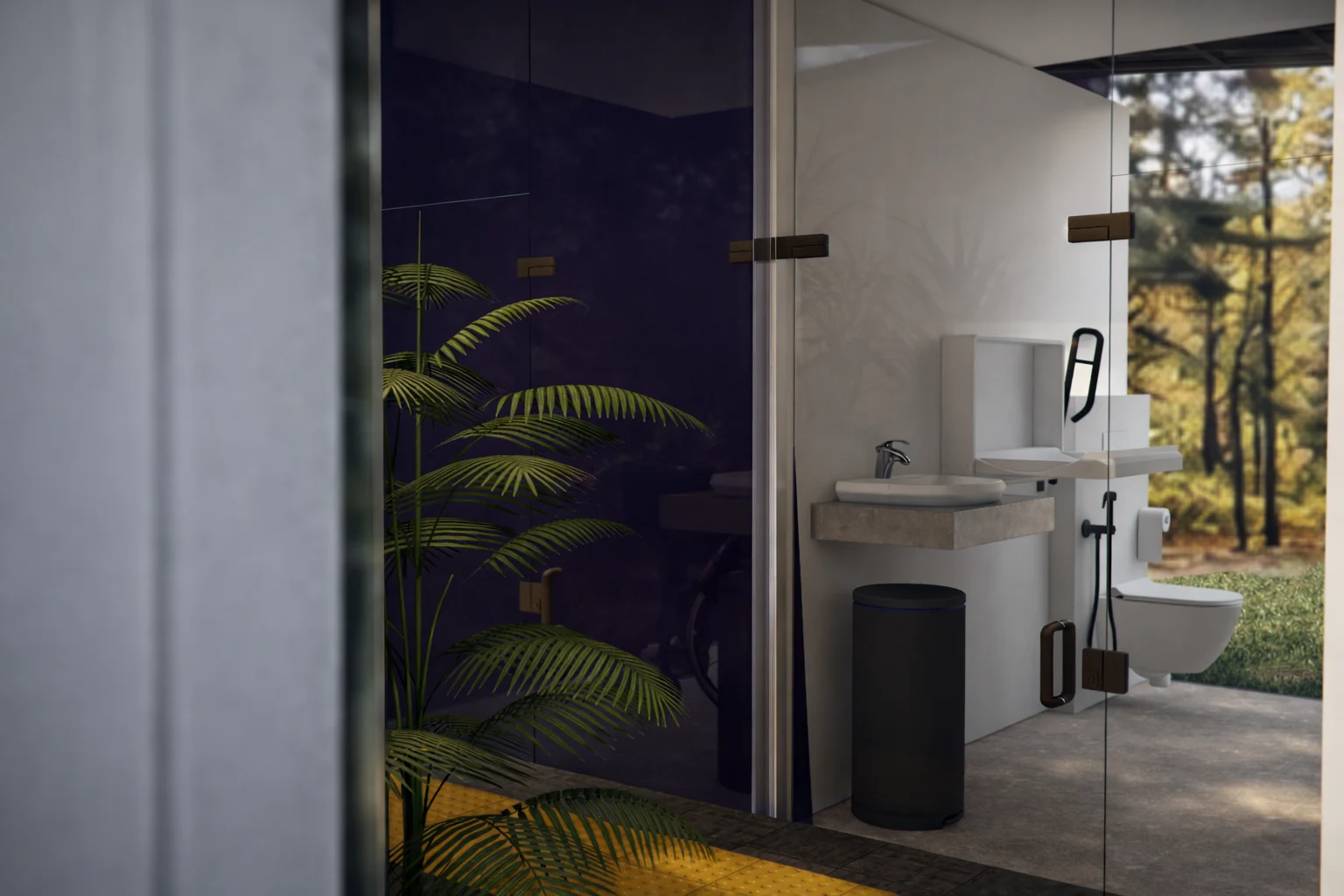
Suspended above the junction of the two structures is a cylindrical LED element, abstracted as a lamp. During the day, it reads as a precise geometric form; at night, it becomes a glowing marker, symbolizing guidance and illumination. Together, the book and lamp create a didactic composition-architecture that educates while it serves. Material selection reinforces this narrative. Electrochromic laminated safety glass is used for restroom walls, remaining transparent when unlocked and turning opaque when occupied, ensuring privacy while celebrating technological honesty. A steel frame structure supports cement board cladding and reflective mirror elements, enhancing light and spatial perception. The sculptural book form is crafted using papercrete, derived from waste paper, symbolizing sustainability and material experimentation. Solar roof tiles generate renewable energy, while mechanical ventilation ensures comfort.
Year Of Design Competition: 2026
Location: Lincoln, Massachusetts, USA